
• Skip to primary navigation
  • Skip to main content
  • Skip to primary sidebar
  • Get A Quote
  • 610.743.5602
  • Schedule A Meeting
default-logo
Menu
  • About
    • Team
    • Careers
    • Work
    • Who Do We Serve
  • HubSpot Agency
    • Marketing Hub
      • Setup & Strategy
        • Inbound Success Plan
        • Inbound Marketing Plans
      • Traffic Generation
      • Lead Conversion
      • Lead Nurturing
    • Sales Hub
      • CRM Implementation
      • Sales Enablement
      • Sales & Marketing Alignment
    • Content Hub
  • Digital Marketing
    • Inbound Marketing
      • Inbound Marketing Plans
    • Content Marketing
    • Email Marketing
    • SEO
    • Social Media Marketing
    • PPC Management
  • Digital Analytics
  • Web Design
    • Shopify Web Design
    • CMS Hub
    • Branding/Graphic Design
    • Our Work
    • Hosting & Maintenance
  • Blog
    • Small & Mid-Sized Business Resources
    • Client Referral Program
  • About
    • Team
    • Careers
    • Work
    • Who Do We Serve
  • HubSpot Agency
    • Marketing Hub
      • Setup & Strategy
        • Inbound Success Plan
        • Inbound Marketing Plans
      • Traffic Generation
      • Lead Conversion
      • Lead Nurturing
    • Sales Hub
      • CRM Implementation
      • Sales Enablement
      • Sales & Marketing Alignment
    • Content Hub
  • Digital Marketing
    • Inbound Marketing
      • Inbound Marketing Plans
    • Content Marketing
    • Email Marketing
    • SEO
    • Social Media Marketing
    • PPC Management
  • Digital Analytics
  • Web Design
    • Shopify Web Design
    • CMS Hub
    • Branding/Graphic Design
    • Our Work
    • Hosting & Maintenance
  • Blog
    • Small & Mid-Sized Business Resources
    • Client Referral Program

Dabrian Marketing Group

The Recipe for Better Team Meetings

July 3, 2013 by Dabrian Marketing Group Leave a Comment

We’ve all had at least one poor team meeting experience…you know the ones I mean—you leave the conference room and have no idea what just happened or why you were forced to experience it. Though it might seem far-fetched, it is possible to have a great meeting experience! The recipe for better team meetings is easy to follow and doesn’t even require a mixing bowl.

Step One: Send a Thorough Invitation

Regardless of how you’re sending your meeting invitations, it is important to include as many details about the meeting as possible. Time, date, and location might be a given, but what else would it be useful for attendees to know?

What is the point of this meeting?

Are you strategizing a website content overhaul? Going over the latest client offering? Letting the team know why they are coming to the meeting is just as important as where the meeting will be held.

How should attendees prepare?

Do they need to do research? Gather ideas for brainstorming? Making sure that attendees are prepared for the meeting will keep everything running smoothly and, as a bonus, help prevent you from getting annoyed about under-prepared attendees (c’mon, you know it’s annoying…).

What should attendees bring with them?

Pen and paper? Laptop? It might sound silly, but if you don’t tell people to bring a notebook and pen, they probably won’t.

Step Two: Prepare to Present

Speaking of preparation, you too should come prepared to your own meetings. Similar principles apply:

Research and brainstorm

Regardless of your industry or meeting topic, times are always a-changin’. What research and brainstorming can you do to make sure you’re up-to-date on your industry’s best practices?

Write an agenda

Agendas and efficient meetings are best friends. An agenda allows you to setup the complete structure of how you will run the meeting, start to finish.
Agendas also allow you a constant method for pulling the meeting back in from potential tangents/sidebars.

Bring what you need

Nothing is more painful to the ego then showing up at your own meeting without your laptop/notebook and pens/etc. Even in a flurry of busy-ness, make sure to remember your own things!

Step Three: Notes, Notes, Notes

You’ll want to use that laptop/notebook and pens/etc to keep track of what happens during the meeting.

Keep record of the meeting

Not only will record keeping help you remember what was established for action items (see Step 4) but also make recapping (see Step 5) much easier.

Delegate the tasks

If you’ll be presenting for the entirety of the meeting, it might be easier to assign note-taking to an attendee (or utilize a staff member who often takes on this responsibility). Make sure that whoever is taking notes writes legibly or types logically.
As a bonus, some really great ideas can be generated when you re-read your notes. You never know what you might come up with!

notes clear and legible
Whether you take hand-written or digital notes, make sure they are clear and can be shared with others (image courtesy of Johan Larsson)

Step Four: Develop a Plan of Action

All good meetings end with a plan of action. A great way to organize your plan of action is with action items. Examples include:

  • The team will send me their notes from the meeting
  • I will send out tasks to persons x, y, and z
  • Our next meeting on this topic will be scheduled for “date”

Note: In addition to notes, action items should also be included in Step 5.

Step Five: Recap

If you’re constantly on the go (which we can safely assume you are), the chances of remembering your meeting last Tuesdays are just as unlikely as remembering what what you had for breakfast. Recapping is a team meeting best practice and is useful for a few reasons:

Collecting the notes from the team

You’ll want to read through everyone’s notes and recapping gives you the time to do it.

Generate meeting highlights

High-level highlights can include main topics of conversation, decisions that were made, and action items

The next meeting scheduled for the topic, if there is one

Even though this is included in the action items, it’s important enough to mention twice. Get the date/time hammered out and then proceed back to step one!

Note: The meeting recap should occur the same day the meeting takes place and be made available to everyone at the meeting.
Even the greatest of leaders can’t have total control over meetings, but being prepared with a great recipe is definitely a great way to plan better team meetings. Have tips or tricks for having better team meetings? Share them in the comments below!

Filed Under: Marketing Strategy Tagged With: meetings, project management

3 Considerations to Ensure Desktop UX Doesn’t Take a Back Seat To Mobile

June 12, 2013 by Dabrian Marketing Group Leave a Comment

We live in a world that is increasingly obsessed with touch devices ranging from smartphones and tablets to smart refrigerators. As I write this blog Apple’s Tim Cook is showing off their latest and greatest devices and iteration of iOS at their developer’s conference. It is pretty safe to say that touch devices are not only here to stay, but also account for a sizable chunk of the devices being used to browse the web. But what does this mean for user experience on the web?

Ever since we noticed the first increase in mobile traffic, the analytics industry has had the mobile web experience under a microscope.

The share of sessions on mobile and tablet devices continues to increase month over month.

Insights into mobile usage drove (and continue to drive) organizations to experiment with different strategies, ranging from mobile variations of their sites to full-blown mobile applications. These tactics all led to better user experiences on these smaller devices, with quicker load times, easier navigation, and increased levels of overall convenience.

Even with the increase in visitor share that mobile and tablet devices are demonstrating, it is important to ensure that the user experience for traditional browsing devices (desktops and laptops) is not sacrificed or fall to the wayside. Here’s 3 things to consider when weighing investments for mobile and desktop-friendly web designs:

The desktop environment isn't going anywhere for a long time

Contrary to what Microsoft and Apple are saying, the desktop environment is not dying and will never die off completely. They claim that the sales of tablets are outnumbering those of traditional laptops and desktops. It needs to be understood, however, that these numbers are not apples-to-apples (no pun intended). Touch-based devices have a much shorter useful lifespan before their hardware or software is no longer sufficient. Consumers can’t upgrade them to the level that they did desktops and laptops. A quick $30 investment in RAM for a desktop can increase its useful lifetime by over a year. With tablets, however, manufacturers found a way to eliminate the consumer’s ability to stretch the time between purchases even longer. Now consumers are purchasing new devices sooner.

I own several touch devices, including a tablet. It’s a fantastic device for checking email, basic browsing, and recreational activities. It is not as great for productivity, however. Though it is definitely better than working from a smartphone, the level of productivity from a tablet cannot match that of a desktop environment. That is why most offices and computer labs at universities will not shift most of their technology over to touch. That is also why the desktop user experience should not be ignored when it comes to web design.

Mobile vs. non-mobile ratios may differ between target audiences

The ratio of mobile vs. non-mobile devices used to interact with a website may differ between target audiences and even different segments within each audience. There is an obvious need for mobile solutions for financial service institutions that offer conveniences like mobile banking. But this need might not justify the cost for other industries.

Does a mobile app or site help accomplish your business goals?

This is single-handedly one of the most important questions to ask when determining how to approach the mobile experience. All too often we see organizations that invest so much in a mobile application or website and come to find that they do not actually serve to drive business in any significant way. Just like any other business investment, it is important to weigh it against what the organization is trying to accomplish and see how much it helps to get it there.

Before I wrap this up, I want to provide some clarification: Touch-based devices are here to stay and their usage is increasing with each month that goes by. I am not advocating that mobile should be overlooked anymore than the desktop user experience should. Both are extremely important for the long-term. Responsive web design has also helped to solve the gap that exists between the mobile and desktop experience. It is just a matter of the level of importance depending upon your organization, audience, and business goals. I’m a huge advocate of doing research and assessing situations before jumping into them.

Recognize some interesting patterns with mobile vs. desktop web designs in your industry? Share them here in the comments!

Filed Under: Digital Analytics, Mobile Marketing Tagged With: desktop design, mobile optimization, user experience, web design

DaBrian Marketing Group, LLC Joins the American Advertising Federation Greater Lehigh Valley

June 10, 2013 by Dabrian Marketing Group Leave a Comment

DaBrian Marketing Group, LLC, a full-service digital agency based in Reading, PA, has solidified a membership with the American Advertising Federation Greater Lehigh Valley (AAF-GLV).

Currently 50,000 members strong, the American Advertising Federation works to grow the advertising community in regions throughout the country. It achieves this by connecting the area’s leading advertisers, agencies, media companies, and vendors through professional networking, educational programs, and other exclusive member benefits.

The AAF-GLV’s achieves its goals by providing members with opportunities to network with peers and industry leaders, strengthen their expertise, promote standards of excellence, give back to the local community, and educate others who are up-and-coming in the industry.

“DaBrian Marketing Group has joined the AAF-GLV both to provide additional opportunities for our staff as well as to become a better agency overall,” said Daniel Laws, principal owner. “We look forward to using the collective resources available to us from the AAF-GLV to learn and grow in the future.”

Through this membership, DaBrian Marketing Group hopes to gain additional exposure in the Greater Lehigh Valley’s advertising and marketing community. DaBrian Marketing Group will strive to utilize the AAF-GLV’s resources to their fullest extent to learn, grow, improve, and succeed.

For more information about the American Advertising Federation Greater Lehigh Valley, call 610-365-7916 or visit them online at www.aafglv.org.

Filed Under: News & Events Tagged With: AAF, AAF-GLV, American Advertising Federation, American Advertising Federation Greater Lehigh Valley

3 Ways to Use Crowdsourcing to Mine Marketing Gold

June 5, 2013 by Dabrian Marketing Group Leave a Comment

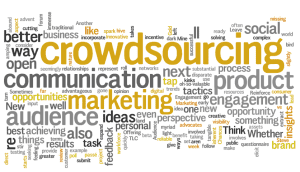
In a traditional sense, the concept of crowdsourcing has been used to complete a specific task by utilizing a vast workforce. Whether the task involves funding a project, solving a complex problem, or even finding a missing person, the operation is the same – bringing together myriad resources in minute amounts to achieve substantial results. Today, the advent of instantaneous digital communication has allowed this process to expand even further.

In this week’s blog, we’ll show you some ways you can extract some real marketing value out of this tried and tested method, and it all starts with thinking slightly outside the box.

When you’re Strapped for Innovative Ideas

Steve Jobs said that innovation is what distinguishes those who lead from those who follow, and in the marketing world, the cutting edge is one of the most advantageous spots to set up camp. New ideas and groundbreaking tactics are often at the heart of a brand’s success, and not just because trends can quickly turn down that dark and dangerous road to the land of the passé. There’s also changing consumer attitudes and expectations to consider. And what’s the best way to tap into that oh-so-valuable perspective? You guessed it, crowdsourcing.

Think about it. An inherent aspect of crowdsourcing is focusing an immense, seemingly disparate group of people into achieving a single goal. When your idea well has gone dry, tap into the torrent of the hive mind. Reinforce open communication and be proactive in seeking input from your audience. Whether in the form of a poll, questionnaire, or review, a new perspective on what your business has been doing can spark creative ideas around what it should do next. Sometimes, all it takes is one nugget of feedback to stir up something fresh and successful. And while we’re on the topic of feedback…

When you Want Better Audience Engagement

People love the feeling of being involved, whether that means taking up a charitable cause, volunteering, or voting in a local election. Chances are if you provide an opportunity to give your audience a voice, more than a few will take up the offer. So how does that benefit your marketing? In terms of garnering engagement, no resource is more useful than social media. These networks represent the most effective way for a business to open a direct line of communication with its audience. Due to their very nature, crowdsourcing opportunities abound with these assets.

Crowdsourcing can uncover marketing insights to save you time and money.

By amping up personal communication via social and asking questions that elicit not only engagement, but your audience’s personal opinion on something, you open up opportunities for more of those priceless insights into how your next steps should pan out. For example, having your social audience choose between design variations or submit suggestions for a new product name can do wonders for engagement. This type of communication can also help…

When your Products / Services need some TLC

New marketing tactics and promotional approaches aren’t the only things crowdsourcing can bring to light. The process of creating a public forum can also assist in product development. How? Through the art of real-world testing. With this kind of crowdsourcing, you can gather insights “from the ground” and in real-time. Think of it as a large-scale beta test before a full-on product roll out. You’ll be able to resolve any kinks and make sure that when all things are “go,” you’ll be putting out a better, more reliable product.

Another way this can tie in to all the situations we’ve mentioned so far is through incentive. Offering your customers a tangible reason to participate in crowdsourcing (like an early bird discount or the opportunity to purchase the product before it’s released) is paramount to achieving the results you want. In the end, you’re left with a better offering, more brand advocates, better customer relationships, and ultimately, lower costs.

Are you ready to incorporate crowdsourcing into your next marketing campaign? Leave a comment and share your ideas!

Filed Under: Marketing Strategy Tagged With: crowdsourced marketing, crowdsourcing, marketing insights

DaBrian Marketing Group, LLC Joins the Greater Lehigh Valley Chamber of Commerce

June 3, 2013 by Dabrian Marketing Group Leave a Comment

DaBrian Marketing Group, LLC, a full-service digital agency based in Reading, PA, has recently joined the Greater Lehigh Valley Chamber of Commerce.

Driven by its dedicated staff and volunteers, the Chamber strives to promote, strengthen, and give back to the local community. It achieves this through active community involvement and by providing local businesses with networking opportunities, marketing services, and other exclusive benefits.

Currently, the Chamber boasts nearly 5,000 members, making it the largest in Pennsylvania and New Jersey and one of the top ten in the nation. Its mission is to improve both the economy and quality of life in the Lehigh Valley. In addition its members’ active participation, the Chamber also advocates pro-business policies at all levels of government and provides training resources and programs to help its members become more profitable and efficient.

“With our recent membership in the Greater Lehigh Valley Chamber of Commerce, we hope to increase our local visibility as well as tap into the Lehigh Valley’s extensive pool of new talent,” said Daniel Laws, President & CEO of DaBrian Marketing Group. “Moving forward, we plan to further enhance our relationship and become active participants in the area’s events and activities.”

DaBrian Marketing Group hopes to gain insight and additional reach and visibility in the Greater Lehigh Valley area by taking full advantage of the wealth of opportunities and resources the Chamber provides.

For more information about the Greater Lehigh Valley Chamber of Commerce, call 610-841-5800 or visit them online at www.lehighvalleychamber.org.

Filed Under: News & Events Tagged With: greater lehigh valley chamber of commerce, lehigh valley, press release

Google Analytics API – Lesson 1: The Basics

May 29, 2013 by Dabrian Marketing Group Leave a Comment

Google Analytics provides ample documentation discussing their various code libraries. However, for someone just starting out, this information can be overwhelming. Even a Google subject can yield millions of results. So to simplify things, let’s start at the very beginning.

What is an API?

API stands for Application Programming Interface and is used to describe how one piece of software interacts with others. APIs are generally used by programmers and developers to create applications that can interact with another company’s application or database. For the purpose of this blog, we will be taking a look at the Google Analytics API, its components, and potential uses.

What is the GA API?

The Google Analytics API (GA API) is a code library written in several computing languages that allows application developers to collect and receive information from the Google servers. At this time, a full data dump is unavailable, but developers can pick and choose specific metrics or dimensions to pull from Google and use for further data analysis. In GA terms, metrics are numeric values, while dimensions are strings.

Google’s intention for releasing the API is to give developers free roam to develop new and exciting applications. Since entire code libraries are provided, the possibilities are endless.

The Collection API

Google’s Collection API is used to collect data, generally specific metrics or dimensions. The default code for collecting data is written in JavaScript, and is provided to all Google Analytics users to place on their site. This piece of code links the Google account with the website, and, after verification, will start collecting data. In addition to the standard piece of code, the code can also be customized to collect specific pieces of data.

After the data is collected from the website, Google passes it through a series of functions to produce the data that is in the dashboard section of the account. It also produces a series of graphics in relation to key performance indicators.

The Reporting APIs

There are two different kinds of reporting APIs. The first of the two is the Core Reporting API. Its main purpose is to be used to produce general reports. In addition, this would be how to access most of Google’s stored data about the website in question. Applications can be written in a multitude of languages, and there are more languages and resources being added by developers all the time.

The second API is the Multi-Channel Funnels Reporting API. This API is for specific Multi-Channel Funnel data, rather than the open nature of its counterpart. It can be used to create custom reports based on this data. As with the Core Reporting API, there are many languages available for coding.

How Can I Use This?

There are no set rules when it comes to the possibilities for using the APIs, but there are some general uses that many follow. In the hands of a good team of developers, any number of apps can be created to take and manipulate Google’s data to fit business needs.

Currently, one of the most popular uses of the API is data warehousing. Data warehousing is a practice generally used by large companies to store huge amounts of data, often on a remote server. If Google Analytics is used, the data from Google can be added to a data warehouse via the API, depending on the language chosen.

Many developers also use Google’s code to collect and store specific metrics for analysis. Though Google provides a lot of information about site visitors, most data analysts are looking for key performance indicators, or a combination of specific metrics. Coding to use these specific metrics instead of using the default dashboard allows the analyst to have an in-depth look at specific pieces of data, in addition to the big picture.

Have you or your company used the GA API for a specific application? Tell us in the comments, and stay tuned for the next part of the series!

Filed Under: Digital Analytics, Google Analytics Tagged With: ga, GA API, Google Analytics, Google Analytics API

  • « Go to Previous Page
  • Page 1
  • Interim pages omitted …
  • Page 35
  • Page 36
  • Page 37
  • Page 38
  • Page 39
  • Interim pages omitted …
  • Page 48
  • Go to Next Page »

Primary Sidebar

Archives

Categories

Subscribe Now


CONTACT INFORMATION

DaBrian Marketing Group
3535 N. 5th Street HWY
Suite 2, #203
Reading, PA, 19605

  • 610.743.5602
  • Mon - Fri: 9AM - 5PM
Contact Us
Web Support

RESOURCES

  • Case Studies
  • White Papers
  • eBooks
  • Small Business Resources
  • Our Blog

MARKETING

  • Financial Services
  • Health & Wellness
  • Ecommerce & Retail
  • Business 2 Business
  • Business 2 Consumer

VISIT OUR LOCATION

  • Get Map & Directions

CONNECT WITH US

Facebook Instagram Linkedin Rss Twitter Youtube

Copyright © 2026 DaBrian Marketing Group  •  All Rights Reserved  •  Privacy Policy •  Terms & Conditions

Scroll Up